OBD cable, obd scanner for bike, obd port, obd scanner, obd scanner
OBD CABLE
OBD cables are designed to be used with An OBD
interface (sometimes referred to as “vehicle interface adapter”) is an
electronic device that allows a computer to access the vehicle network. It is
similar in operation to a computer modem, in that it translates messages from
one protocol to another.
What is the purpose of OBD?

On-board diagnostics
(OBD) refers to the automotive electronic system that provides vehicle self-diagnosis
and reporting capabilities for repair technicians. An OBD gives technicians
access to subsystem information for the purpose of performance monitoring and
analyzing repair needs.
What are the benefits of OBD?

Let's understand OBD in a nutshell:
·
Inexpensive option as
opposed to GPS tracking software. ...
·
Enhance fleet and
driver's safety. ...
·
Early Diagnosing of
malfunctioning becomes handy. ...
·
Increase the
probability of DIY fix. ...
·
Easiness and
flexibility that comes with installation. ...
·
High compatibility
across vehicles. ...
·
Reduce pollution.
The On-Board Diagnostics II (OBD-II) port is used to
access the vehicle's computer for various tasks, such as emissions tests and
diagnostics. The OBD-II port is where the Hum System is installed so that
the network can communicate with the vehicle directly.
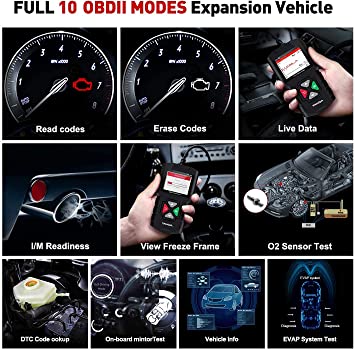
OBD-II offers a
standard way to access many types of data, including:
·
Real-time parameters:
RPM, speed, pedal position, spark advance, airflow rate, coolant temperature,
etc.
·
Status of “Check
Engine” light
·
Emission readiness
status
·
Freeze frame: a
“snapshot” of parameters at the time a trouble event has occurred.
·
Diagnostic trouble
codes (DTCs).
·
Oxygen sensor test
results
·
Vehicle Identification
Number (VIN)
·
Number of ignition
cycles
·
Number of miles driven
with MIL on
Maintenance vehicles, such
as salt spreaders or dustcarts, are vital for a modern city and its dwellers.
Management of complex machinery requires a vast amount of specific data –
sprinkling distance, covered spreading area, amounts and types of materials
used, working hours and many more parameters. You can have all this and more at
your fingertips with our solutions.
In the development,
analysis and optimization of electronic networks and ECUs Vector supports you
with various devices. Our spectrum of products covers several interfaces that
interconnect your PC with the CAN, LIN, J1708, Automotive Ethernet, FlexRay or
MOST bus systems, data loggers, analog and digital measurement hardware and
tools that enables you to interpose into the bus physics. Programming libraries
support you in developing custom made applications.
OBD
cables are designed to be used with An OBD interface (sometimes referred to
as “vehicle interface adapter”) is an electronic device that allows a computer
to access the vehicle network. It is similar in operation to a computer modem,
in that it translates messages from one protocol to another.

Off-the-Shelf
OBD Cables
We
deliver quality molded cables at the lowest prices in the industry. We have
thousands of standard OBD cables in stock, so whether you’re a product engineer
or an electronics hobbyist, chances are, we have your OBD cable. No order is
too big or too small
MAPOUT24 offers cables and adapters for CAN,
FlexRay and Automotive Ethernet, cables for OBD and K-Line, I/O Piggy and SYNC
for the network interfaces. Mapout24 India OBD2 Male To OBD2
Female Extension Cable (30 cm) for Elm327, launch and OBD 2 Car diagnostic
Scanner (OBD-2 Converter cable)
·
save the wear
and tear on your scan tool's OBD connector
·
support all
16 real pins other cable don't support all 16 pin
·
supporting
almost all obd 2 device device elm327, launch x431 ,
·
Made from
heavy quality martial for last long operation
WHAT IS AN OBD ADAPTER?
Communication
protocols used in modern vehicles are incompatible with standard computer
protocols (RS-232, USB, and so on). An OBD adapter (sometimes
referred to as “vehicle interface adapter”) is an electronic device that allows
a computer to access the vehicle network. It is similar in operation to a
computer modem or a gateway, in that it translates messages from one protocol
to another.
Normally,
the data flows both ways — to and from the ECU. For example, in order to
display the RPM or trouble codes, the following series of events must take place:
1. Software sends a request for RPM to the OBD adapter via one of the standard channels (e.g.,

USB).
2.
OBD adapter receives the request, and retransmits it to the ECU
on one of the OBD protocols (e.g., J1850).
3.
The ECU responds with the data, the OBD adapter relays the reply
back to the software.
4.
The software decodes the reply, and displays it to the user.

Comments
Post a Comment